
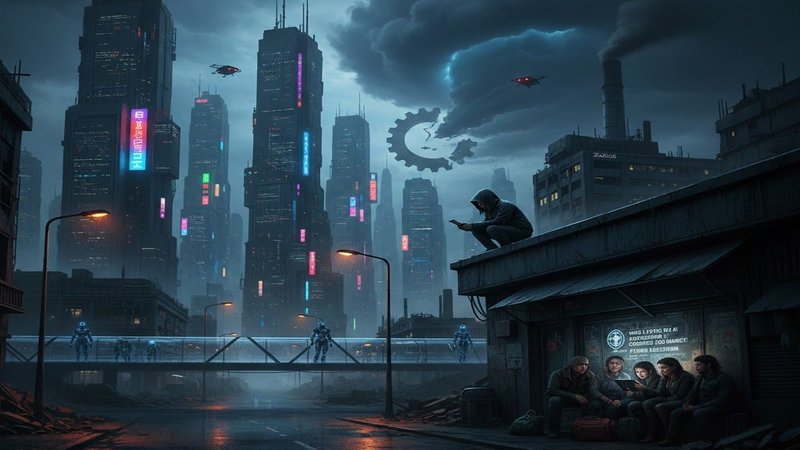
Are you worried about AI causing an unprecedented wave of job loss? That’s exactly what I’m here to talk about today. According to MIT research, 11.7% of the labor market has been replaced by AI in sectors like finance, healthcare, and professional services. The New York Times reported that Amazon plans to automate around 600,000 warehouse jobs with robots. Salesforce, Walmart, Paramount, UPS, and YouTube are investing heavily in AI technology.
The impact is staggering: Goldman Sachs projects up to 6-7% of the U.S. workforce could be displaced due to AI adoption. McKinsey’s analysis suggests that as much as 40% of American jobs could be automated by 2030, which is a truly alarming statistic.
Millions of Americans are now struggling to support themselves after losing their means of income, with Cook County allocating $7.5 million for a basic income program approved unanimously by commissioners. This proposal highlights the urgency in addressing job displacement caused by AI advancements.
The concept of universal basic income (UBI) has been implemented as part of Illinois’ budget proposal, where 94% of participants used their funds to address financial emergencies, showing that the program made them feel more financially secure and positively impacted overall. However, concerns about funding such programs are raised with decreased commercial real estate values in Cook County leading policymakers to pushback against increased property taxes.
The AI industry’s valuation is skyrocketing due to data use without consent, but many Americans still lack income due to a lack of means testing. While AI advancements will likely cause massive job losses over the next ten years, it’s crucial that we consider alternatives like universal basic income (UBI) as a way to support those displaced by automation.
In summary, AI is reshaping our economy and causing widespread job displacement. Universal basic income (UBI) presents an alternative solution to address these economic challenges while helping people adapt to the future workforce’s ability to adapt and create new opportunities. Let me know what you think about this article!













Leave a Reply