
There are thoughts in my head like the rain hammering against the windows, a relentless drumming that felt oddly…familiar. It’s a sound that always seems to amplify the questions swirling around in my head, doesn’t it? I’ve been spending a lot of time lately considering how we’re going to navigate the future, and frankly, it’s unsettling. And this article is kinda hard to write…
The Algorithm’s Gaze
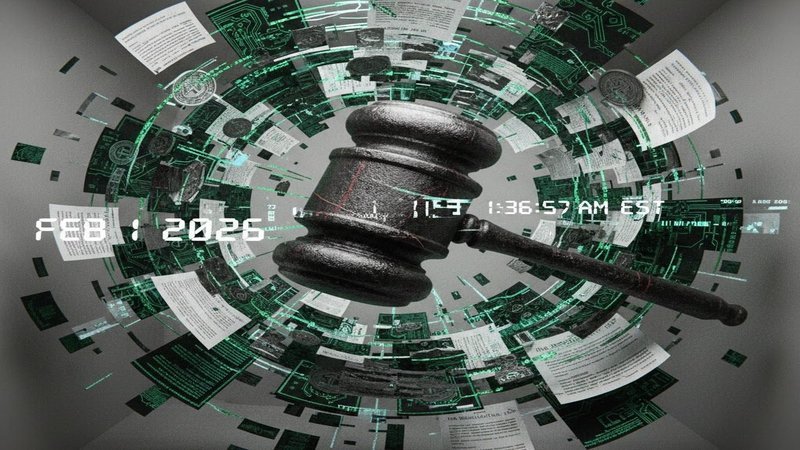
We’re talking about artificial intelligence (AI), of course. Not the cute chatbots that mimic conversation, but something far more substantial—something capable of processing information at a scale and speed that dwarfs human capacity. The idea isn’t new, but the urgency feels different now. It’s not just about streamlining tasks; it’s about fundamentally altering the way we make decisions, particularly in areas where fairness and impartiality are paramount: government and the courts.
The core concept—using AI as an impartial observer—is gaining traction. Imagine an algorithm meticulously dissecting proposed legislation, identifying potential loopholes or unintended consequences with ruthless efficiency. Think of it sifting through mountains of legal precedent, spotting patterns and contradictions that a human lawyer, burdened by fatigue and perhaps, let’s be honest, a little bit of prejudice, might miss.
It’s a seductive proposition, isn’t it?
There’s a real push to accelerate processes. Bureaucratic delays—they’re a constant frustration, a grinding slowdown that eats away at productivity and, frankly, makes you want to scream. This technology promises to cut through the red tape, to deliver outcomes faster. But—and this is a big but—it raises some serious questions about accountability.
Bias in the Machine
The problem isn’t the potential for speed. The danger lies in the data. AI learns from the data it’s fed, and if that data reflects existing biases—and let’s be clear, most of our data does—the algorithm will simply amplify those biases. It’s a feedback loop, a self-fulfilling prophecy of inequality.
Consider the legal system. If the data used to train an AI to assess sentencing patterns contains historical data reflecting racial disparities—a deeply troubling reality—the algorithm will inevitably perpetuate those disparities. It won’t intend to do so, of course. But the outcome will be the same. (By the way…) It’s a chilling thought, isn’t it?
We need to be incredibly vigilant. We need to build in safeguards—robust auditing mechanisms, diverse development teams, and a constant awareness of the potential for bias. It’s not enough to simply say, “The algorithm is objective.” We have to ensure it is.
The Human Element
The debate isn’t about whether we can use AI in these sectors—the answer is demonstrably yes. It’s about how. It’s about preserving the human element—the empathy, the judgment, the understanding that comes from lived experience. Can an algorithm truly grasp the nuances of a complex human situation? Can it account for the intangible factors that often determine the outcome of a case?
I suspect not entirely. The goal shouldn’t be to replace human judgment entirely, but to augment it—to provide a powerful tool that can assist us in making better, more informed decisions. It’s about leveraging the strengths of both human intelligence and artificial processing power.
The challenge, then, is to build systems that are transparent, accountable, and—above all—fair. It’s a monumental task—a complex undertaking—and one that demands careful consideration. It’s a conversation we need to be having, loudly and often.
—And frankly—I’m not entirely sure we’re up to the challenge.












Leave a Reply