Decoding Music Piracy: Techniques & Financial Impacts

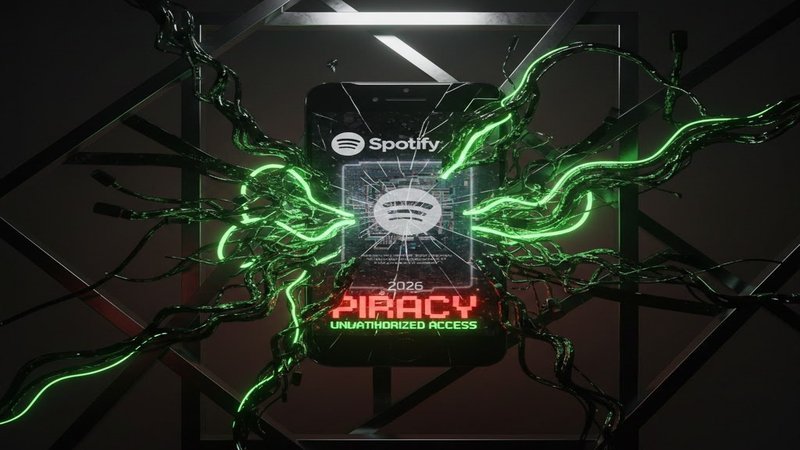
Read Time: 3 min.Let’s be clear: the idea of “piracy” has evolved. It’s not just about teenagers swapping CDs anymore. It’s a far more complex, technologically-driven issue, and frankly, it’s a persistent problem. This isn’t about judging individual choices; it’s about understanding the underlying forces at play and how they’ve reshaped the music industry. This article is aimed at anyone who’s ever wondered how people get music without paying, or who’s simply curious about the financial implications of it all. The New Napster Landscape Look, the early days of Napster were pretty straightforward: p2p file sharing. People uploaded music they owned, and others downloaded it. It was messy, it was chaotic, and it fundamentally disrupted the record industry. But the core problem – the desire for access – remained. Today, that desire hasn’t gone away; it’s just manifested in a whole new set of tools and techniques. – Music piracy – Wikipedia (https://en.wikipedia.org/wiki/Music_piracy) The biggest shift has been the rise of streaming services. Spotify, Apple Music, YouTube Music – these platforms offer vast libraries of music for a monthly fee. But let’s be honest, the price of a subscription isn’t always appealing. People exploit loopholes – using VPNs to access content in different regions, utilizing services like spotify join to share accounts, or employing browser extensions to bypass payment systems. It’s a constant game of cat and mouse between the streaming services and those seeking free access. Downloading the Tracks: Beyond the Album You want to download a single song? It’s not as simple as downloading an entire album anymore. The trend is moving towards replicating Napster’s model: acquiring individual tracks. Torrenting remains a significant method, distributing files through networks like The Pirate Bay and 1337x. These sites host massive libraries of music, often in lossless audio formats that aren’t available on streaming services. You’ll use clients like qbittorrent to download these files. – Understanding Music Piracy and its Impact on the Industry » Reprtoir (https://www.reprtoir.com/blog/music-piracy) But it’s not just torrents. Social media platforms like Telegram and Discord have become hubs for music piracy, with bots automatically distributing files and users sharing links directly within groups. There are also smaller, less-publicized services that specialize in providing links to individual tracks, often through file-sharing networks. The Numbers Don’t Lie (or Do They?) Let’s talk about the money. In 2022, global revenue loss due to music piracy was estimated at around $5.3 billion. Europe accounted for the largest portion, followed by North America. Torrenting dominated downloads, but the rise of “stream ripping” – downloading audio from streaming services – was a notable trend. – The Music Piracy Paradigm: Analyzing the Ethics of Napster (https://medium.com/@benmparker/the-music-piracy-paradigm-analyzing-the-ethics-of-napster-8697571c3e83) By 2023, this figure had climbed to approximately $5.8 – $6.5 billion, driven by continued streaming popularity and the use of VPNs. The dark web also contributed significantly, with estimates of $800 million – $1.2 billion in revenue loss. Projections for 2024 suggest a continued loss of $6.2 – $7.1 billion, with emerging technologies like ai-generated music adding another layer of complexity. – Music piracy – Wikipedia (https://en.wikipedia.org/wiki/Music_piracy) It’s important to remember that these are estimates. The music industry struggles to accurately track piracy, and the decentralized nature of the activity makes precise figures elusive. The “Stone in a lake” Effect You’ve probably heard the analogy: a single ripple in a lake can create a wave that spreads across the entire surface. – Understanding Music Piracy and its Impact on the Industry » Reprtoir (https://www.reprtoir.com/blog/music-piracy) That’s precisely what music piracy represents. Napster created a disruption, and every subsequent attempt to shut it down has simply created new access points. The internet’s decentralized nature makes complete eradication incredibly difficult. The Bottom Line The financial impact of music piracy is substantial, representing billions of dollars in lost revenue annually. It’s a complex issue with no easy solutions. The industry continues to adapt, but the underlying desire for free access – for music, for content, for anything – remains a powerful force. Ultimately, understanding this landscape isn’t about condemning individuals; it’s about recognizing the fundamental tension between creators and consumers in the digital age.











Leave a Reply