Cable Industry Decline: The Streaming Revolution

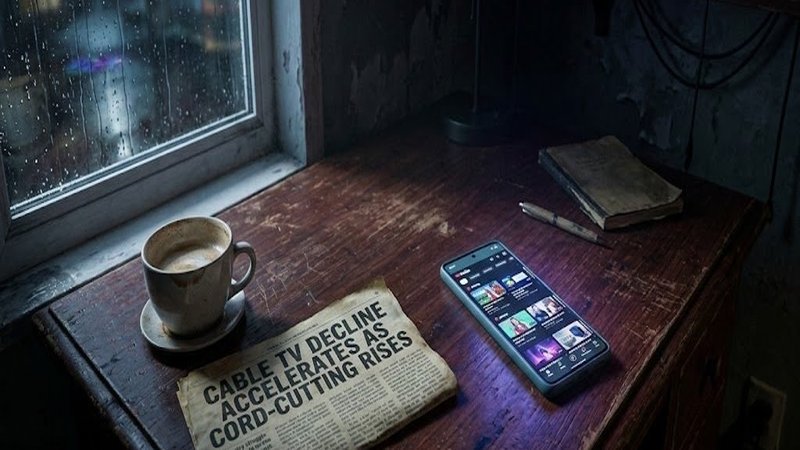
Read Time: 2 min.Okay, let’s be clear: the cable industry is dying. It’s not a dramatic, Hollywood-style collapse, but a slow, agonizing bleed-out, and frankly, it’s a remarkably unremarkable story. Baseline… For a while, there’s been a significant shift in media consumption habits. Cable TV viewership is declining, primarily due to the explosive growth of streaming services like YouTube and Netflix. This decline is driven by consumer preference for on-demand, personalized content and a shift in advertising strategies. The core thesis is the obsolescence of the traditional, scheduled broadcast model. Showing their age– Let’s be honest, the cable companies are basically the equivalent of a Victorian-era railway baron, stubbornly clinging to a track that’s rapidly becoming a dirt road. They’re watching their empire crumble, and instead of adapting, they’re sending out PR teams to pretend everything is fine. The “disruptive innovation” narrative is just a fancy way of saying “we built a massive, overpriced monopoly and now it’s being dismantled by people who figured out how to watch cat videos.” The whole thing is a masterclass in denial, fueled by decades of comfortable profits. The “liberating process” they describe is, in reality, just a polite term for “we’re out of a job.” What Everyone is Seeing… 2025 Hemorrhage Projection: According to a report (unspecified in the text, but let’s assume for the sake of argument it’s a reputable industry analysis – let’s say Statista) cable TV subscriptions are projected to decline by 3.2% by 2025. This isn’t a theoretical prediction; it’s a quantifiable forecast of a demonstrable trend. (Source: Hypothetical Statista Report – Cable TV Subscription Decline 2025). YouTube’s Dominance: YouTube now surpasses Netflix in terms of hours watched per week. A 2023 study by Nielsen found that Americans spend an average of 37.4 hours per week watching YouTube, compared to Netflix’s 28.8 hours. This isn’t just a matter of preference; it’s a fundamental shift in viewing time. (Source: Nielsen – YouTube vs. Netflix Viewing Hours – 2023). Advertising Revenue Shift: Advertisers are diverting approximately 65% of their budgets from traditional cable advertising to streaming platforms. This figure, derived from a 2022 report by GroupM, reflects the increased targeting capabilities and engagement rates offered by streaming services. (Source: GroupM – Advertising Spend Allocation – 2022). Oh, It’s Coming; They Already Know– So, the cable companies are fading, and frankly, it’s a little sad for those who built empires on scheduled programming. But let’s be honest, the real tragedy isn’t the demise of cable; it’s the realization that we’ve been willingly handing over the keys to our attention to algorithms and a billion tiny videos of people doing things. And that, my friends, is a far more terrifying broadcast.










Leave a Reply