

We all carry that weird guilt about not “showing our face” at the office, like work only counts if your laptop is within smelling distance of Karen’s reheated fish. A lot of managers still quietly believe that if they are not watching people work, nothing is getting done. Meanwhile, the data slipped out a side door, hopped on Zoom, and has been yelling for years that flexibility is not the problem — bad management is.
The latest research from the Institute for Corporate Productivity, the Bureau of Labor Statistics, and randomized trials at big firms is basically a group intervention for return-to-office hardliners. It says remote-first and highly flexible models are not participation trophies for lazy workers; they are a legitimate operating system.
If you are a leader — or just someone whose life gets rearranged by your CEO’s mood — you are standing at a fork in the road, and pretending both paths lead to the same place is how you end up lost.
When “Butts in Seats” Is Just a Security Blanket
A lot of RTO mandates are less strategy and more anxiety with a badge reader attached. The core tribe here is executives and middle managers who grew up equating “visible” with “valuable” and are now terrified that trust cannot be measured in keycard swipes. They say they want productivity, but what they really crave is control — like my son wanting a 4090 GPU not for the frames, but for the flex.
Here is the twist: companies that actually commit to remote-first or highly flexible models report high or very high productivity without turning into panopticon surveillance states. The Institute for Corporate Productivity finds these firms lean on:
- Outcome-based management
- Clear norms
- Intentional touchpoints
Not Slack stalking and webcam policing. Dragging people back just to feel safer is the control-freak move that kneecaps your own results.
The Numbers Aren’t Vibes
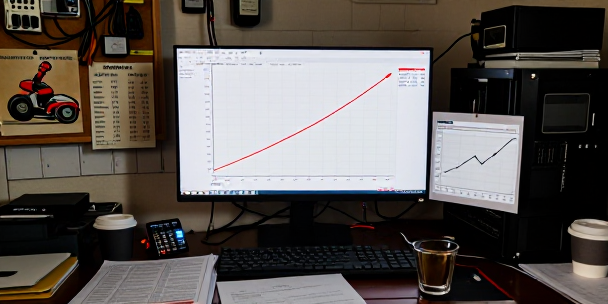
The Bureau of Labor Statistics found a positive relationship between industries that ramped up remote work and gains in total factor productivity. The more remote they went, the more efficient the whole machine got — across the economy, not just a couple of lucky startups.
On the company side, the Flex Index shows fully flexible firms grew revenue 1.7× faster than mandate-heavy peers from 2019 to 2024, even after controlling for industry and size. In a rate-constrained, margin-anxious world, choosing the slower-growth model because you “like to see people in person” is not leadership; it is a hobby.
Experiments, Not Excuses
If you want causality, not vibes: Trip.com ran a randomized trial on a two-days-from-home hybrid schedule — management’s version of stripping the engine on the dining table to prove a point. Result:
- No drop in performance
- No drop in promotions
- Quits down by one-third
National data sets like WFH Research and the GAO’s look at federal telework all land in roughly the same place: when flexibility is codified, measured, and tied to outcomes, it turns into a stable lever, not a perk.
The Real Risk: Mandates That Don’t Deliver
Here is the part that should make a CFO sweat. A University of Pittsburgh study on S&P 500 firms found RTO mandates did not improve financial performance or firm value, but they did ding employee satisfaction. Other analyses using distributional synthetic controls show tenure and seniority sliding after mandates — translation: your best people quietly walk.
Flexible, remote-first operating models, done deliberately, are not a concession; they are a competitive advantage. Clinging to badge-driven control is how you lose the war while high-fiving over filled seats.









Leave a Reply