

I was standing in my living room the other night, remote in hand, just trying to find something simple for dinner in the background, when the exact same Roku home screen ad popped up again. Same character, same colors, same weirdly thirsty vibe. At this point I could recognize that plus-sized elf faster than my own HDMI inputs.
There is something uniquely irritating about an ad that pretends it is “content you might like” instead of what it is: a paid billboard sitting in the middle of what should be your space.
When your TV stops feeling like yours
In my house, the Roku home screen used to feel like neutral ground. Boxes for apps, a clean grid, minimal noise. Now it feels more like walking through a mall where the same kiosk worker keeps shoving the same sample at you every time you pass.
People love to explain this away with “oh, it is based on your browsing history” as if that is comforting. As if the ad is more welcome because some opaque system has decided it knows what you secretly want to click. Meanwhile, a lot of folks are seeing stuff that is nowhere near their habits or interests.
The reality in my living room is simpler: my viewing history is not the product. My attention is.
Why the repetition feels so invasive
It is not just the art style, or the body type, or even the genre. It is the repetition. When the same tile sits there every single time you boot up, it stops feeling like an ad and starts feeling like pressure.
My wife usually scrolls right past anything that looks remotely clickbaity, but even she has said “why is that still there” after the fourth or fifth night in a row. That is the point where it crosses from “mildly annoying” into “okay, this is getting weird.”
Repetition is a classic marketing trick that becomes unbearable when you cannot properly opt out.
The illusion of control
Technically, Roku gives you that tiny act of resistance: hover, hit the star button, select “Don’t show this ad.” When it actually does something, it feels like rearranging furniture in a rented apartment just to make it feel slightly more like your own.
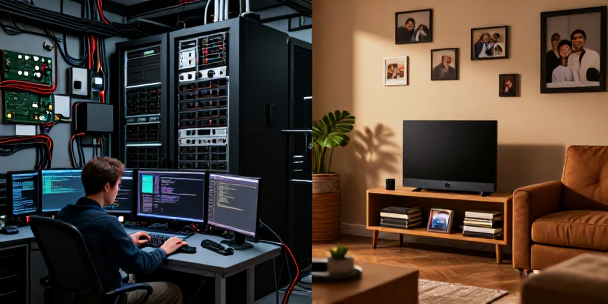
But some people hit star and do not get that option at all. Others choose it and see a different ad just as loud and just as inescapable. At my desk I can run DNS tricks or a Pi-hole to tame ads on laptops and phones, but on the TV in the living room, you run into hardcoded limits really fast.
When you need network-level hacks just to keep your home screen from turning into a rotating suggestive poster wall, something is off.
Net positive, with a loud asterisk
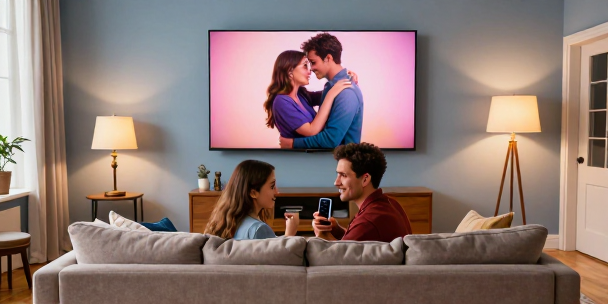
streaming in general is a net positive in my house. My son gets his games and shows, my wife has her dramas and cooking content, I get my niche stuff, and nobody is chained to a cable schedule. That part works.
Roku’s home screen ad strategy, though, is a net negative. Not because ads exist, but because they are unavoidable, repetitive, and largely unaccountable on the one screen everyone has to pass through.
In a shared family space like a living room, basic control over what appears by default is not a bonus feature. It is respect.








Leave a Reply