
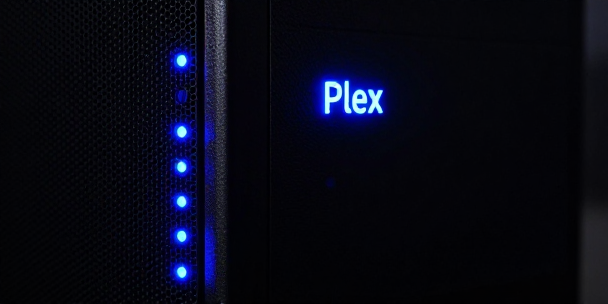
If you know, you know. The screen on my rig lit up at 2:00 AM, casting a blue glow across my desk and interrupting a perfectly good night of sleep. It wasn’t a server crash or a drive failure on my local NAS setup. No, it was a corporate update from a media ecosystem that used to feel like a cozy, local-first haven.
Plex announced they are hiking their lifetime pass to a staggering $750.
For anyone who has spent years meticulously organizing media, spinning up containers, and enjoying data sovereignty, this feels like a cold bucket of water over the head. It is a calculated move to pricing out the average prosumer, and honestly, it signals the final stretch of an era. This massive price jump is a massive net negative for the self-hosting community.
 enshittification of the platform has been impossible to ignore.
Paying a premium to be spied on and locked out of your own hardware is a bad joke.
We have been forced to watch them push ad-supported streaming, social discovery features nobody asked for, and a centralized authentication system that ties your local server to their cloud infrastructure. If their authentication servers blink, your media on a box three feet away suddenly becomes inaccessible. The platform has officially outgrown its original enthusiast roots.
The Open Source Rescue Party
Thankfully, the open-source landscape is not the barren wasteland it was a decade ago. I recently decided to spin up a Jellyfin container right alongside my existing setup to see if the grass was actually greener. While the interface might lack some of the corporate polish that a multi-million dollar company can buy, it completely respects the core ethos of data ownership.
Privacy shouldn’t carry a three-figure subscription fee.
There are no tracking emails showing what your neighbors are watching, and there is no phone-home requirement just to play a movie in your own living room. The client apps have matured rapidly, making it incredibly viable for daily use. The community backing has turned it into a powerhouse.
Crossing the Friction Threshold
Of course, migrating an entire household to a new platform is never entirely friction-free. When a platform change requires a technical support ticket at the kitchen table, the administrative overhead of running a home lab starts to feel like a second job.
Even with those minor hurdles, the writing on the wall is too clear to ignore.
My son expects high-bandwidth, instantaneous streaming for his media habits without dealing with transcoding hiccups on an older smart TV client. Navigating these family expectations requires patience and a bit of configuration wizardry. We are testing new client apps every evening to smooth out the bumps.
Voting with Your Infrastructure
We have reached the point where sticking with a corporate ecosystem out of pure habit is a losing strategy. The astronomical price hike is just a corporate megaphone confirming that self-hosters are no longer the target demographic. Investors demand endless recurring revenue, and a one-time lifetime license simply does not fit into that spreadsheet.
It is time to pull the plug and reclaim the server.
By shifting our time and energy toward genuinely free, local-first alternatives, we protect our data sovereignty and build a more resilient setup. The power belongs back in the home rack, not the corporate cloud. Taking control of the pipeline is the only logical step forward.





Leave a Reply