Beyond Apps: How AI is Changing Everyday Conversations


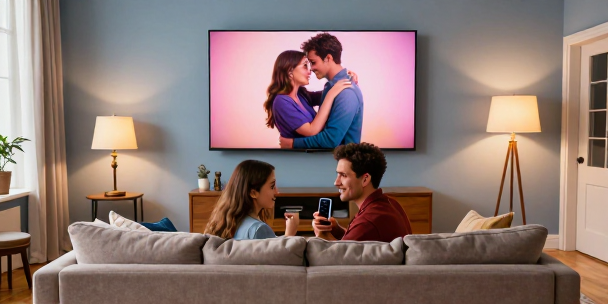
Read Time: 2.5 min.My weirdest tech moment lately was my wife casually asking, “Did you tell your AI about that argument we had?” while we were cleaning up after dinner. I was standing at the sink, hands in soapy water, realizing she genuinely meant it. Not in a sci fi way, but in a “this thing is in our business” way. That is when it hit me that all these “smart” tools are no longer just apps on my laptop. They are quietly moving into our conversations, our routines, and our arguments. The strange part is that I invited them in. For me, this whole wave of AI helpers is a net positive, but not in a shiny, miracle way. It is more like a slightly unreliable roommate who sometimes saves you three hours and sometimes rearranges your kitchen drawers for no reason. At my desk, I use AI to rewrite dull emails, outline posts, and surface research that would have taken me days to dig up. It speeds up the work I already know how to do, instead of pretending to do it all for me. That is the only reason I still trust it. The second it starts insisting it can “handle everything,” my guard goes straight up. Why I Let It Near My Work Stuff When I am on my laptop, this tech earns its keep by being aggressively boring. I give it structure, and it fills in the gaps. If I have a half baked outline, it will suggest angles I can sharpen in my own voice. When I am staring at a blank screen, it can at least get the clay on the table so I can do the sculpting. I never ask it to be brilliant. I ask it to be fast. That is the power shift that makes AI feel like a tool instead of a threat in my Workflow. I decide the premise, the priority, and the boundaries. It suggests, I accept or delete. Nothing gets through just because a model generated it. That is also the one rule that keeps my content from sounding like a mediocre robot that swallowed a style guide. Where It Gets Messy At Home The tension shows up in the living room, not at my desk. My wife hates when technology adds friction between her and what she actually wants to do. She does not care how “smart” the system is if it takes longer to figure out than simply doing it the old way. If using an AI driven recommendation means three menus, two logins, and a privacy warning, she checks out. Her logic is brutal and correct. Convenience beats clever every time. My son lives on the other side of the spectrum. If the connection is fast and the game does not lag, he is happy. He will tolerate any amount of background magic as long as it does not touch his frame rate. For him, the idea that some invisible system is optimizing his experience is background noise. He just wants his match to load faster than mine. Choosing Where AI Belongs At ‘casa de me’, the tech that survives is the tech that respects our thresholds. It can sit quietly in my workflow, help with language, Summaries, and structure, and stay out of our personal dynamics. The second it tries to predict our moods, police our habits, or insert itself into family decisions, it crosses from net positive to net negative. The future I actually want looks simple: tools that stay in their lane, help me think more clearly, and never forget whose life they are supposed to be serving.








Leave a Reply