Local AI Models: A Shift in Workflow

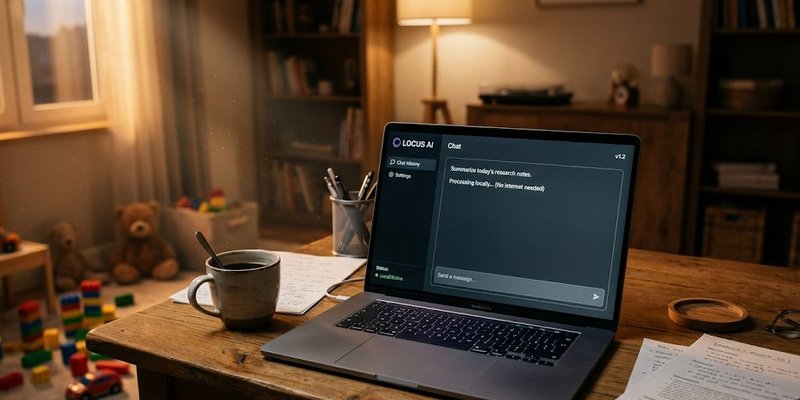
Read Time: 3 min.The moment I realized something had shifted was when I caught myself reaching for my local model instead of a cloud tab, almost on reflex. I was on the couch with my laptop, my son in the next room yelling at a game, and I had one of those annoying “this needs code, context, and a web search” problems from work. Normally that is a straight trip to Claude or Gemini. This time I pointed my editor at Gemma 4 on my modest box and just waited to see if it fell over. It did not. It acted like a real assistant instead of a fun toy. What struck me was not raw tokens per second but how little time it wasted thinking. I had Qwen 3.5 27B and 35B set up before, and while the quality is excellent, you can feel it grind through long chains of thought on fairly simple prompts. Gemma 4, especially the 26B A4B variants people are running through llama.cpp and LM Studio, feels like a high‑strung lawyer who reads fast, decides fast, and just answers. On mid‑range consumer hardware, having that kind of responsiveness from a local agent is a net positive for anyone trying to get real work done without renting someone else’s GPU. Mixed Signals, Real Tradeoffs Of course, the picture is not clean. If you read through enough user reports, you see two parallel realities: on one side, people on M1/M4 or tuned CUDA setups talking about blazing speeds, solid tool use, and 128k‑context coding sessions; on the other, folks stuck in endless tool‑call loops, bad argument schemas, and memory leaks that eat 100 gigabytes for breakfast. That is the price of living at the intersection of new MoE architectures, half‑baked frontends, and ever‑shifting chat templates. Gemma 4 clearly has some temperament when it comes to tool calling; Qwen 3.5 often feels more stable and predictable there, especially with complex editing workflows in Zed or Copilot style harnesses. Where Gemma 4 shines is the “good enough across everything” band. People are using it for GDPR adversarial letters, translation, light coding, MCP tools, even life organization and email triage. It can roleplay, it can chat naturally, it can do basic vision tasks, and it respects instructions more often than not. Qwen is still the heavyweight for deep context and large multi‑file refactors, but Gemma gives you something a lot closer to a generalist colleague living entirely on your desk. Tools, Templates, And The Human In The Loop What has become obvious to me is that half of the “Gemma is broken” versus “Gemma changed my life” divide comes down to scaffolding. People who keep llama.cpp or vLLM up to date, use the current Google or Unsloth chat templates, and accept a slightly slower, more conservative sampling config tend to report stable behavior. Those who jam it into old runtimes or mismatch templates with aggressive tool‑calling setups get stuck in loops and think the model is dumb. That is not unique to Gemma, but it is amplified by how strongly it leans on system prompts and tool schemas to decide when to think and when to act. At home, that distinction is obvious even outside of work. My wife uses a small 1B helper model wired into the same stack just for naming chats, summarizing web search, and cleaning up emails, while I wake the “big” Gemma only when the task actually needs it. She does not care about MoE routing or Q4 quantization; she just notices that the assistant answers fast and does not freeze her machine. That is the line local models have to cross to matter: they stop being a hobby and start being invisible infrastructure. Where This Actually Leaves Us If I step back and look at the whole thread of experiences, I would still classify Gemma 4 as a net positive for the local‑LLM crowd. It is not strictly better than Qwen 3.5 on quality, especially for vision and huge codebases, and some of the tool‑calling behavior genuinely needs work. But for many people running 3060‑class GPUs, M‑series Macs, or small Strix Halo boxes, Gemma 4 is the first time “local only” feels like a reasonable default instead of a compromise you make out of principle. The most interesting part is not that it wins any single benchmark, but that it narrows the comfort gap with cloud models to the point that you can realistically mix and match: Gemma 4 locally for everyday coding, writing, and search, Qwen or a cloud model for the rare monster task. If you care about privacy, latency, or just owning your own tools, that quiet shift might be the biggest story hiding in all those Reddit comments.






Leave a Reply