
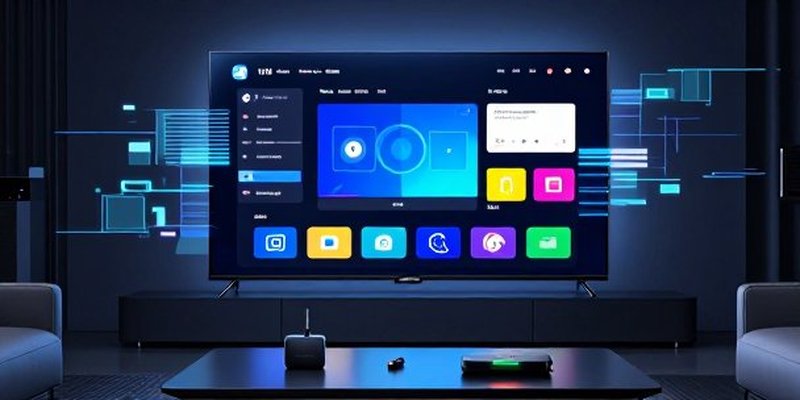
Roku was an answer to a problem, but now they are a problem. We can all agree that buying a premium television should be a seamless, exciting upgrade for any modern home entertainment space. You unbox a gorgeous new panel, marvel at the flawless contrast levels, and naturally assume the integrated software will treat your personal media library with absolute respect. The actual day-to-day reality of modern smart displays rarely matches the pristine marketing fluff printed on the cardboard packaging.
However, we consistently fall for this convenience trap simply because managing a single remote control looks incredibly tidy on the living room table.
Silicon shortcuts ruin the user experience every single time.
Cheap Components and Data Harvesters
Browsing the forums over the weekend confirmed a highly frustrating trend I have been tracking from my own desk for months. Television manufacturers regularly skimp on internal infrastructure by burying underpowered processors, laughable memory pools, and severely outdated network interfaces beneath your beautiful screen. This underpowered hardware quickly mutates your expensive display into a sluggish billboard designed to serve intrusive advertisements rather than comfortably decode heavy media streams.
Consequently, these massive corporate entities care far more about selling your behavioral telemetry to the highest bidder than ensuring a flawless local playback experience.
The integrated application ecosystem is essentially abandonware before the manufacturer warranty even expires.
Real World Friction at Casa de Me
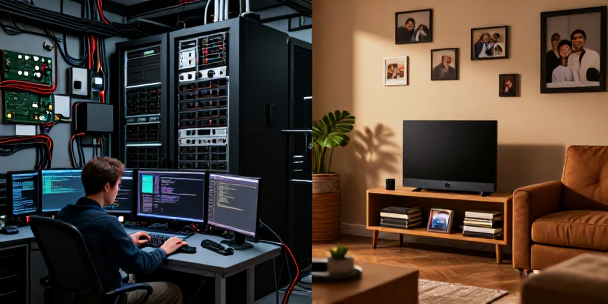
This severe processing deficit creates genuine friction in my house whenever the evening relaxation routine kicks in. My wife just wants to launch a family movie without constantly diagnosing why the television interface is freezing or why basic audio streams are failing to pass through cleanly. My son expects instantaneous response times that mirror his responsive local gaming setup instead of waiting for a bloated operating system to fetch sponsored content thumbnails.
Meanwhile, navigating these sluggish menus transforms a quiet evening into an impromptu tech support session that completely ruins the household mood.
Domestic tranquility requires entirely separating your display panel from your actual computing power.
The Android Ecosystem vs. The Roku Walled Garden
Looking closely at the technical landscape reveals why choosing the right external hardware platform is absolutely critical. While standard solutions like Roku offer a heavily locked-down, un-customizable ecosystem that permanently glues corporate advertisements to your home screen, an open platform changes the entire game. Opting for a budget-friendly, Walmart-branded Onn 4K Pro Streaming Device grants you complete access to the flexible Android TV environment instead of a corporate walled garden.
Therefore, relying on open-source flexibility allows you to side-load advanced applications and take total control over your hardware interface.
Total software freedom completely destroys rigid, proprietary ecosystem limitations.
Reclaiming the Home Theater Performance
Investing in this specific independent hardware solution for my setup has proven to be a resounding net positive. By utilizing a clean, custom third-party launcher like Projectivy, you can completely strip away the default Google bloatware and boot directly into a snappy, ad-free media dashboard. Furthermore, plugging a cheap USB-to-Gigabit adapter into the available USB 3.0 port instantly bypasses the capped 100 Mbps Ethernet bottleneck to stream massive, uncompressed 4K files flawlessly.
Implementing a tiny piece of external hardware can completely revitalize a frustrating home theater ecosystem for a mere fraction of the cost of a high-end dedicated player.
Stop letting a display manufacturer dictate your local streaming performance.


Leave a Reply