
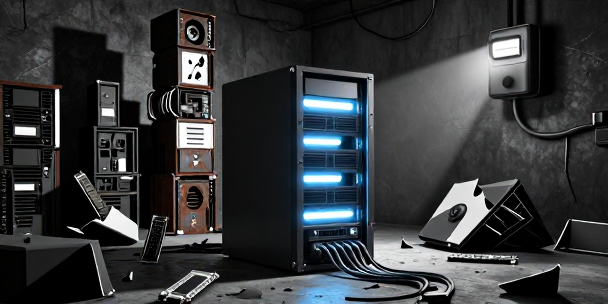
There is a comforting lie we all tell ourselves when we first clear out a corner of the basement and plug in that very first refurbished enterprise server. We whisper that we are doing this to learn, that the jet-engine fan noise is just the sound of progress, and that the triple-digit spike in the monthly power bill is a reasonable tuition fee for a self-taught data center education. It is an easy narrative to swallow when you are eagerly unboxing heavy iron that used to run a bank.
But eventually, the novelty wears off and reality hits your wallet.
Lately, while sitting at my desk watching the power meter practically spin off its spindle, I have been thinking about what a complete ground-up rebuild would actually look like today. If a sudden catastrophic power surge fried every single motherboard in my rig overnight, I would not replace a single piece of standard enterprise gear. The used market has fundamentally mutated into a playground for day traders, turning what used to be a cheap, rewarding hobby into an absolute financial nightmare.
Trading Kidneys for a Stick of Memory
Building a functional infrastructure from scratch right now feels less like engineering and more like getting squeezed by a global components cartel. Trying to source a simple replacement stick of server-grade DDR5 memory or a few reliable high-capacity drives makes you feel like you need to take out a second mortgage just to keep a few containers running.
Consequently, the days of picking up cheap, abundant enterprise hand-me-downs to experiment with are completely dead.
My wife already looks askance at the sheer amount of space my gear occupies, but she would definitely lose her mind if she saw the current invoice prices for basic storage. Even my son, who mostly just cares that his local game servers do not lag, has noticed the household bandwidth budget tightening because we cannot afford to cleanly scale out our physical nodes anymore. When a niche drive size costs triple what it did two years ago, the joy of tinkering evaporates.
The Hypervisor Trap and Single Nodes
Everyone on the forums defaults to recommending massive virtualized clusters and complex hypervisor setups the second a beginner asks for advice. I fell into that exact trap years ago, segmenting every single trivial service behind layers of abstract management code that I never actually required.
Yet, for a single-node setup running in a residential closet, throwing a massive hypervisor layer over everything is just adding a bloated administrative chore.
Unless you are actively migrating live virtual machines between multiple physical hosts in your house, you are essentially just burning extra electricity to simulate a corporate data center. I have learned the hard way that a clean, plain Debian install running simple, managed compose files handles everything flawlessly without the overhead. It keeps things lightweight, predictable, and simple enough that an update won’t accidentally break your entire ecosystem while you sleep.
Documenting the Chaos Before it Burns
If I am forced to start over from the bare metal tomorrow, the very first tool I deploy will not be a fancy networking suite or a massive media server. It will be a completely empty, localized markdown file dedicated strictly to rigorous, step-by-step infrastructure documentation.
Because when your configurations inevitably blow up at two in the morning, a fancy dashboard will not save you.
We all love to brag about our uptimes and our complex virtual local area networks, but almost none of us can actually reconstruct our custom routing tables from memory after a major crash. Forcing myself to manually type out every single command and environment variable ensures that I actually comprehend the system I am building. True tech resilience is not about buying the loudest, most expensive box on eBay; it is about knowing exactly how to rebuild your kingdom when the hardware inevitably fails you.











Leave a Reply