
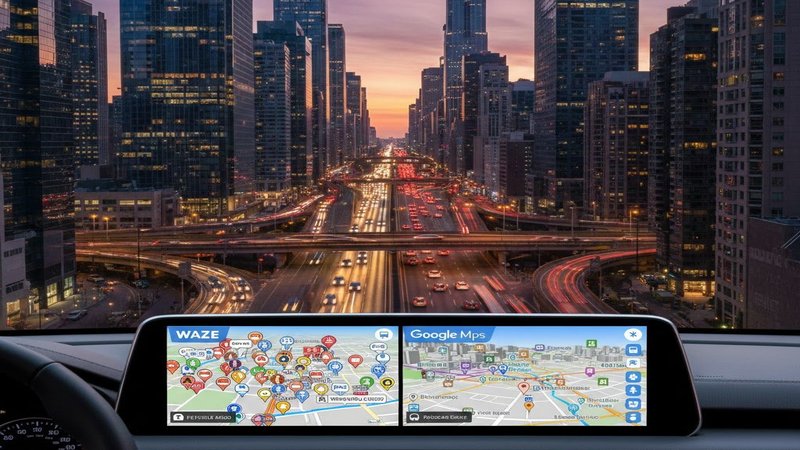
As someone who still needs GPS just to get to the grocery store, I’ve grown pretty dependent on navigation apps for almost every trip I take. For day-to-day driving, two apps keep coming up over and over: Waze and Google Maps. They’re both owned by Google, but they feel very different to use.
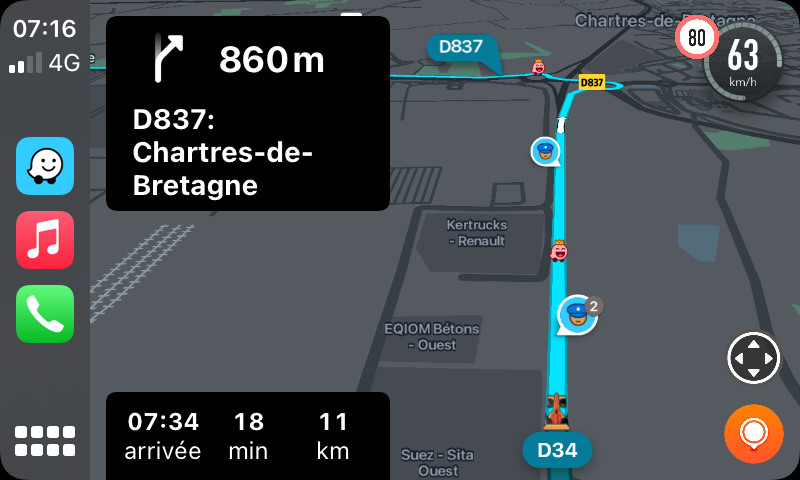
Waze was bought by Google in 2013, but it still runs as its own app. Its big selling point is the community behind it. Drivers constantly report what’s happening on the road in real time—accidents, traffic jams, police sightings, construction, and random hazards. Because of that steady stream of input, Waze is often very quick to spot slowdowns and suggest weird little side-street detours that you’d never have thought of on your own.
Google Maps, by contrast, is more of an all-purpose mapping platform than just a driving app. It ties into a lot of other Google tools: Street View for ground-level imagery, Google Earth for more detailed views, and built-in transit directions for buses, trains, and subways. On top of that, it has a huge amount of information about local businesses, reviews, photos, hours, and so on. It’s closer to a general “where is this and what’s around it?” tool than a pure traffic app.
Because of these differences, the two apps tend to attract slightly different types of users. Waze usually appeals to drivers who care most about beating traffic and don’t mind a bit of app “chatter” along the way—things like pop-up alerts about police, crashes, and road closures. There’s a light social aspect to it, with avatars, points, and the sense of driving as part of a crowd.
Google Maps, on the other hand, tends to be the default for people who want one app that does almost everything: walking directions, transit routes, biking paths, as well as driving. If you’re trying to figure out which café is open late, whether a place has parking, or how to get across town without a car, Maps is usually the more useful choice.

In terms of overall popularity, both have loyal fans for different reasons. Waze is often the favorite for commuters who deal with heavy traffic and want the fastest possible route, even if it’s a bit unconventional. Google Maps is the go-to for people who want a more complete view of an area and who use navigation for more than just driving.
In the end, it isn’t so much that one app is “better” than the other. They’re built with different priorities in mind. If your main goal is shaving minutes off your drive and staying aware of what’s happening on the road right now, Waze is hard to beat. If you want a broader, more informative map that covers multiple ways of getting around and helps you explore what’s nearby, Google Maps is usually the better fit.
Both apps have ended up filling their own niche in how people travel, and having both available gives users more flexibility to choose what works best for a particular trip.











Leave a Reply