Anthropic’s Burning Cash: Is the LLM Narrative Breaking?

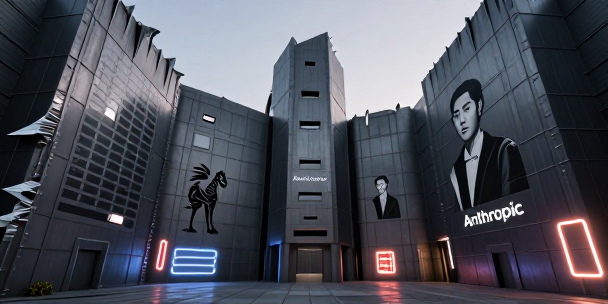
Read Time: 2 min.You already know the story by now: the eye‑watering training bills, the Chinese models racing up the leaderboards, and the safety throttles that feel more like handcuffs than guardrails. You have probably watched the LLM rankings like others watch stock tickers, done your own “$ per token” back‑of‑the‑envelope math, and seen the value gap grow harder to ignore. Maybe you have even cancelled a subscription or quietly swapped Anthropic out of your stack while telling yourself you’d “revisit it next quarter.” This piece is for you—the people who have been tracking all of this in real time and are starting to wonder if the narrative is finally breaking. The Numbers Don’t Lie Anthropic, the darling of the AI world, built on a foundation of resisting government demands and championing safety. Now, they’re facing a harsh reality check. Their legal filings reveal a staggering $10 billion spent on training and inference alone, against a paltry $5 billion in revenue. They’re burning money at an alarming rate, and those recent, desperate “cost-saving” measures? They’re just a band-aid on a gaping wound. It’s like my wife, bless her heart, trying to fix a leaky faucet with duct tape while the entire plumbing system is about to explode. The Chinese Comeback The real kicker? They’re getting steamrolled by Chinese AI companies. A recent report from the US-China Economic and Security Review Commission highlighted how Chinese labs have closed the performance gap with Western models, even adopting key architectural advancements. LLM Rankings, a surprisingly reliable indicator of popularity, currently places six Chinese AI models above Anthropic’s Claude Opus and Sonnet. And the market share? It’s plummeted from 29.1% to a dismal 13.3%. It’s a stark reminder that even the most virtuous intentions can’t compete with sheer economic force. The Price of Purity The problem isn’t just about cost; it’s about functionality. Kilo Code’s comparison of Claude Opus and MiniMax M2.7 found that the Chinese model delivered 90% of the quality for a mere 7% of the cost. Seven percent! Anthropic’s attempts to claim these models are mere copies, while perhaps technically true, ring hollow when you’re paying a premium for a product that’s demonstrably inferior. It’s like my son, the high-spec gamer, complaining about a slightly lower frame rate while I’m trying to explain that the game just works on my mini PC. The Security Paradox And then there’s the self-inflicted wound of their safety obsession. Anthropic’s commitment to safety has alienated security researchers, who now find Claude’s models overly censored and prone to false positives. One researcher even cancelled a $200/month subscription after encountering these issues. They’ve essentially built a fortress around their AI, only to trap themselves inside. It’s a classic case of good intentions paving the road to… well, irrelevance. The Transparency Problem The lack of transparency from these US AI giants is infuriating. They preach about existential threats while simultaneously erecting impenetrable walls around their technology. It’s a recipe for distrust and, ultimately, market failure. People are voting with their wallets, and they’re choosing the cheaper, more accessible, and frankly, less frustrating options – even if those options come from China. Folk are getting dangerously attached to AI that always tells them they’re right.

Leave a Reply