
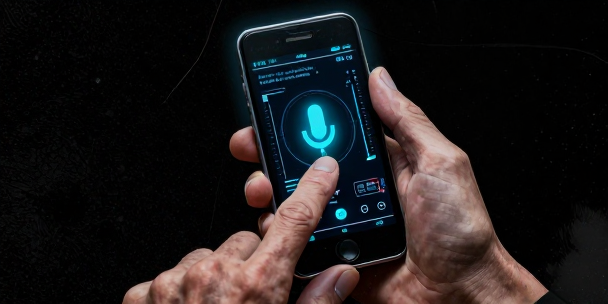
It is an undisputed truth that we spend half our digital lives waiting for technology to accurately understand what we just said. From clunky voice assistants to automated phone menus, the friction of speech recognition has been a collective headache for a generation. Everyone agrees that having to repeat yourself three times to a machine is the ultimate exercise in modern frustration.
But amazing what you find in your downloads folder when you actually stop to audit the latest foundational models.
The baseline for speech recognition accuracy has quietly reached an absolute peak.
Shifting Power From the Cloud to the Desk
Big tech players are dropping massive updates like Google’s Chirp 3 or Microsoft’s context-aware architectures that finally catch multi-speaker dynamics without choking. The engineering weight behind these proprietary enterprise models is undeniably impressive for heavy corporate environments that rely on massive data pipelines. We are seeing unprecedented accuracy metrics that make old-school transcription look like ancient history.
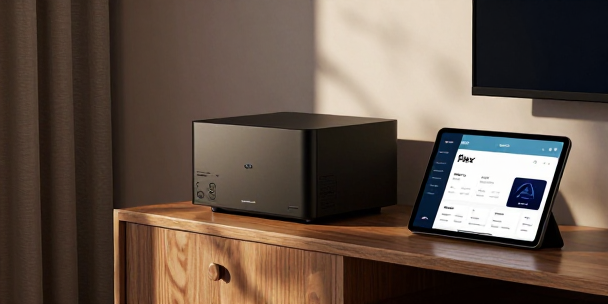
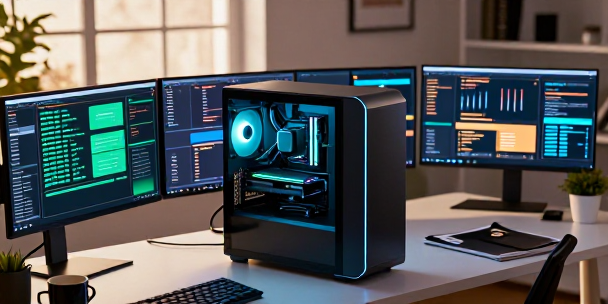
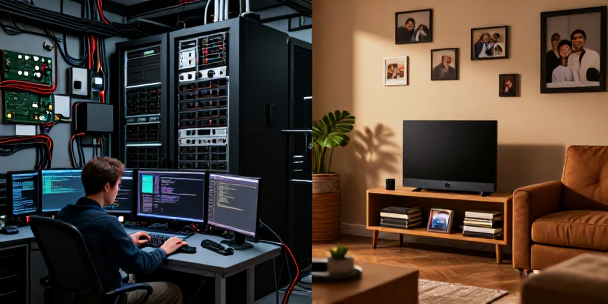
However, the real magic is happening right at casa de me on my mini rig where open-source alternatives are completely turning the tables.
Local execution is no longer a pipe dream for independent developers.
Cohere released an open source model that explicitly topped traditional industry benchmarks without requiring a massive corporate server farm.
Defeating the Friction of the Constant Connection
We have all dealt with the nightmare of cloud-grade tools dropping the ball the moment the internet connection hiccups. My wife experienced this tech friction firsthand yesterday when her dictation app wiped an entire message because our local network briefly stuttered during an authentication check. It highlights why relying completely on remote data centers for basic productivity is a massive vulnerability.
Therefore, the entire industry is pivoting hard toward localized compute to keep daily workflows running smoothly.
Adobe and Speechmatics deliver cloud-grade speech recognition on-device for Premiere to change the game entirely.
This shift allows creators to process heavy audio timelines completely offline without worrying about data residency or unpredictable cloud subscription bills.
Niche Vernacular and the Autonomous Horizon
Generic models have historically stumbled the second you throw complex medical jargon or highly specific engineering terms into the conversation. New integrations from specialized players like Rad AI are proving that hyper-specialization is the true frontier by building tailored speech tools for radiology reporting. This level of precision ensures that critical documentation is processed accurately without requiring constant manual corrections.
Consequently, transcription is no longer just about spitting out flat text onto a digital screen.
Voice is officially the primary gateway for autonomous software integration.
The Autonomous Orchestration Engine
We are moving into an era where software listens, understands deep context, and executes multi-step workflows without constant human hand-holding. My son already expects this exact level of immediacy, often grumbling about hardware latency while his gaming tools try to parse real-time audio commands on our high-bandwidth setup. The convergence of instant speech recognition and agentic logic means our applications are finally becoming truly interactive.
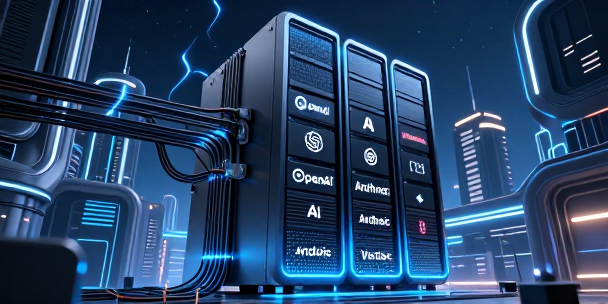
Thankfully, tools like Envoy AI Gateway v1.0 are establishing open-source standards to govern this massive influx of automated traffic securely.
Voice commands are transforming into fully actionable software triggers.






Leave a Reply